What is Apollo?
Apollo is a sales intelligence and engagement platform designed to cover the full outbound sales workflow in a single tool: finding contacts and companies, enriching them with accurate data, reaching them through sequences of email and calls, and reporting on the results — all without stitching together a separate database provider, sequencing tool, dialer, and analytics layer.
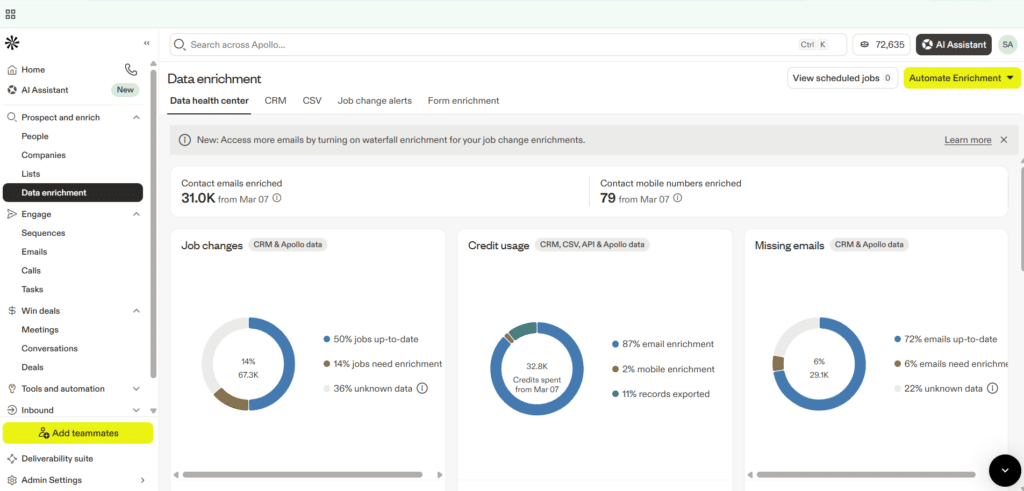
The product's left-hand navigation reflects this all-in-one positioning directly: Prospect and Enrich (People, Companies, Lists, Data enrichment), Engage (Sequences, Emails, Calls, Tasks), Win deals (Meetings, Conversations, Deals), Tools and automation, and Inbound — a workflow structure that mirrors the actual stages of an outbound motion.
Prospect and Enrich: the database layer
At its core, Apollo is built on a large, continuously updated B2B contact and company database. The Data enrichment screen shows this in action: a workspace with 31,000 contact emails enriched and 79 mobile numbers enriched from a given date, alongside credit usage tracking (32.8K credits spent, with 87% allocated to email enrichment, 2% to mobile, and 11% to record exports).
This enrichment layer is what differentiates a sales intelligence platform from a plain CRM: instead of manually researching a prospect's job title, company size, or direct email before reaching out, reps can pull verified, enriched data on demand, either one record at a time or in bulk via CRM and CSV sync.
Engage: sequences, emails, calls, and tasks
The Engage section houses Apollo's outbound execution tools — multi-step sequences that combine email, calls, and tasks into a single automated cadence. Rather than manually tracking who needs a follow-up email versus a call versus a LinkedIn touch, reps build a sequence once and let Apollo advance contacts through each step automatically, pausing for manual actions like calls where a human touch is required.
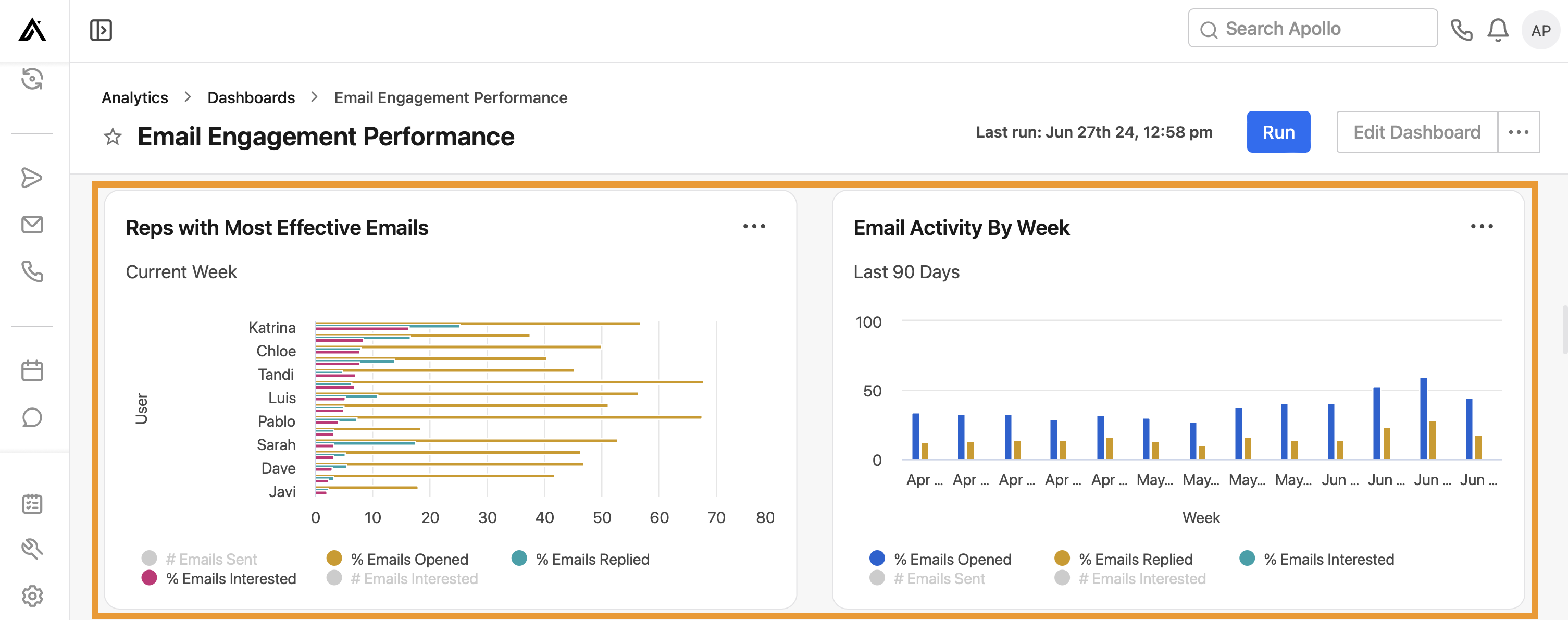
Performance of these sequences — open rates, reply rates, and rep-level effectiveness — is what feeds the Email Engagement Performance dashboard, reviewed separately in this series.
The Engage layer turns 'who do I need to follow up with today' into an automated cadence instead of a mental checklist.
Win deals: meetings, conversations, and deal intelligence
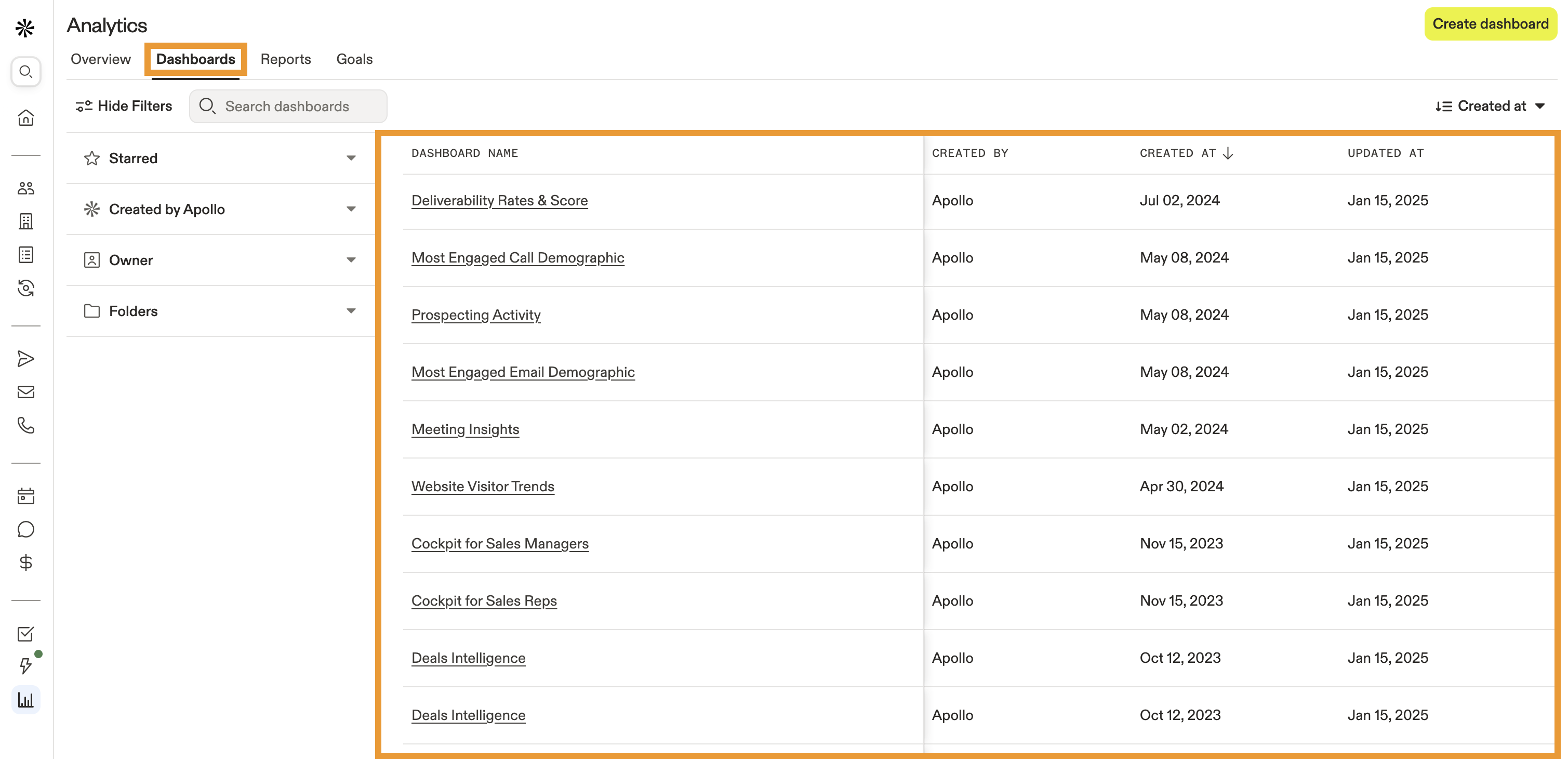
Once a prospect responds, Apollo's Win deals tools take over: Meetings for scheduling (tracked in the Meeting Insights dashboard), Conversations for call and email history, and Deals for pipeline tracking. The two 'Deals Intelligence' dashboards visible in Apollo's dashboard library suggest this pipeline-analysis layer is treated as a first-class reporting area, not a bolt-on.
Where Apollo fits alongside a phone/communication layer
Apollo's own Calls feature covers dialing and call logging within sequences, but many outbound teams pair Apollo's prospecting and sequencing strength with a dedicated business phone platform for the actual voice and text layer once a lead moves from cold outreach into an active conversation. We reviewed one such pairing candidate, Quo, in a separate five-part series covering its analytics, call outcomes, and AI transcription features.
Verdict
Apollo earns its reputation as one of the most complete outbound sales platforms on the market by covering the full workflow — data, outreach, and reporting — under a single navigation structure and a single data model. Teams that previously stitched together a database vendor, a sequencing tool, and a separate BI dashboard for sales reporting can consolidate meaningfully by adopting Apollo.
For growth-stage sales teams building or scaling an outbound motion, Apollo's combination of enrichment depth and dashboard breadth is difficult to match with a piecemeal stack.